
November 28, 2025
VAR 3.0 Is Coming: How UEFA's Automated Offside and Real-Time Audio Transparency Could Change the 2025/26 Season
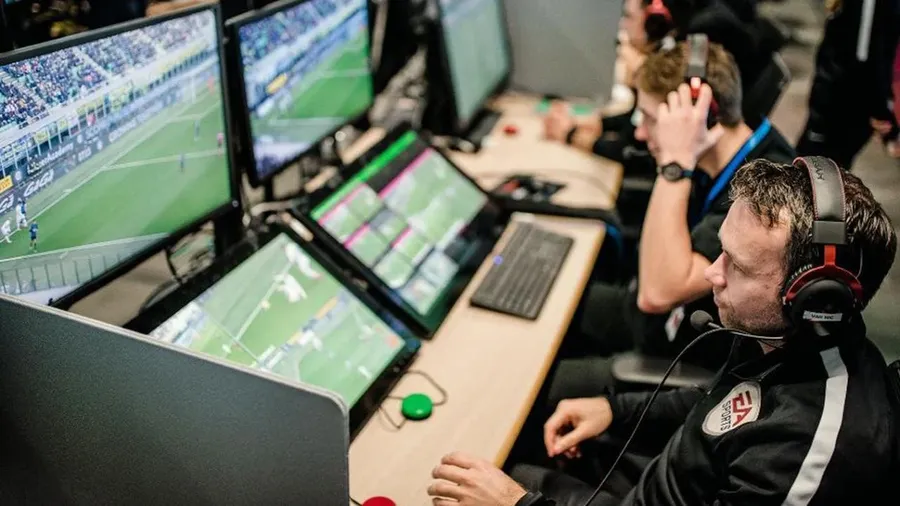
The Video Assistant Referee (VAR) was introduced with great hopes in mind. It was supposed to make the game fairer and to instill a sense of certainty about how referee decisions were made. In a way, it has managed to do that, but it came with certain downsides as well.
Over the years, VAR has been updated and gone through several versions, with the newest one to be introduced in the 2025/26 season. In this article, we'll go over the history of VAR, the innovations that the new version will bring, and how it will affect the game.
VAR 1.0 and 2.0: What's Broken and What's Improved
VAR was first introduced in the 2018/19 season, and the stats show that it made referee decision-making fairer. However, both fans and teams have been complaining about many of its downsides. Some of the best crypto sports betting platforms allow players to bet on outcomes regardless of VAR decisions. These sites allow players to place wagers in crypto without providing personal data.
The biggest complaints have been about delays, which break the game's tempo, and about opaque reasoning, which makes using VAR feel like asking a black box for the outcome.
Automated Offside: Inside UEFA's Limb-Tracking Revolution
The technology update that caused the most controversy was the automated offside technology. The high-speed tracking cameras mounted on stadium roofs monitor dozens of body points on every player, thereby enabling very high frame-rate video to determine whether a player is in an offside position positively. In some cases, the ball itself could have sensors and trackers to help pinpoint where the ball is at any time.
The process is still semi-automated, and the referees still need to confirm it. The biggest complaint, therefore, is that the decisions take way too long and completely disrupt the game.
What Automated Offside Will Change

There are several significant and concrete benefits to using automated offside technology.
The speed should improve once the technology is fully implemented and the guidelines for its use are clearly defined.
The use of 3D animation allows broadcasters, referees, and even fans to clearly see what happened rather than guess, as is often the case. The entire VAR process would be broadcast on various stadium screens and during TV broadcasts.
Tactically, things will change as well. The defenders will push higher, knowing the tech will back them up if there's even the smallest infringement.
Real Time Audio Transparency
One common concern about VAR is that players, management, and fans can't follow the decision-making process in the VAR room. The decision is just conveyed to them once it's made.
To mitigate these concerns, both the room and the referees will wear microphones and explain their decisions in real time. For example, a referee could say: "After VAR review, the goal is disallowed: attacker No. 9's left foot was ahead of the second-last defender at the moment of the pass."
How VAR 3.0 Could Change the 2025/26 Season On the Pitch
VAR will change a few things, now that it's further updated and more complex:
Tactic and coaching. Defensive units will be more confident now that VAR is faster and delays are shorter. Attackers will refine their timing even further, especially now that they know the end result will be even more precise.
Game Flow. Stoppage-heavy games were no one's favorite. They disrupt the flow and tempo of the game, often leading to a strategy change. With the whole process being more efficient and faster, delays should be much shorter.
Psychology and Trust. Making the process more transparent, including both the graphics and the microphones, will help everyone involved trust the referees more. The fans will also be able to understand the rationale behind the decisions.
Governance and Technical Issues
There are a few governance issues to be resolved between the regulatory bodies governing the game and the broadcasting providers that can also handle both the audio transmission and the graphics involved. UEFA and IFAB must balance innovation with the core principle: technology should support human referees rather than replace them.
Technical malfunctions also remain a risk that could jeopardize the entire system. Over-reliance on technology will lead referees to use VAR even when it's not needed.
To Sum Up
VAR has been around since 2019, and since then it has undergone many changes. The process became more transparent, but also more complex, and it has started to cause longer delays. Even though this has made the games fairer, it's mostly disliked by both fans and teams.
The newest version of VAR will be able to semi-automatically find players in the offside position by tracking every player with multiple cameras at all times. This will further improve the fairness of football games and is expected to reduce delays.

- Premium xGscore predictions
- Profitability ROI 5% and higher
- 24 Premium tips This Week